My husband is a quiet man, who lived a long time as a bachelor, enjoying quiet pursuits like writing, hiking, and bird watching. We married when he was 49– nearly five decades into a lifestyle that highly values silent moments. I, on the other hand, had always lived around noise. Being a mother, educator and public programs coordinator I was always in the midst of layered sounds and chaos. For me, listening to the sounds of others has been an important way of gaging how people feel in situations – whether things are going well, or not. “Noise” is just evidence of living in my view.
So, when Tom and I were enjoying time in a park and nearby children were playing and screaming, I was surprised when he turned to me, annoyed and said, “Why do they have to do that?” “They’re happy!” I explained. “They’re making a joyful noise. Were you never a kid?” Tom seemed stunned by my response. After a pause, he reminded me that he’d lived with his grandparents as a child, and his mother had cautioned he and his brother to not be “noisy” and irritate them. It made me sad to think of children, trying to suppress their natural expressions of joy and the discovery of their strengths through voice. His comment made me see him not just as the beautiful, strong, deeply insightful man I love, but also as a man who carries around memories of a suppressed child inside. It taught me that there are no doubt others out there, who have been discouraged at having a voice. That was not my experience growing up though.
That early discussion has changed Tom. And he now looks at the world differently. When we are in public places where people shout and play, I look at him and say, “They are enjoying themselves. Can you hear it?” To me it is as beautiful as the robins that sing the morning chorus each sunrise. And certainly, it has helped reframe how Tom relates to our grandchildren, who don’t know how to contain their vocal enthusiasm for just about everything.
I hear joy in so many things that surround me. I hear it when my little dog Harley and I play chase and wrestle – his little grunts and play growls. I hear it in the purr of small kittens that want to cuddle. I hear it in the excited clucking and squawking of my chickens when they see me heading to their coop to treat them to some grapes. I hear it in our muffled chuckles while watching favorite television comedies or in laughter on the phone, when we reconnect with dear family and friends. I hear joy in Tom’s voice when he’s singing and playing his guitar in the other room. I hear joy when someone eats something I’ve cooked, and they respond with an “Mmmmm.” And I hear the sound of my own joy when I inhale, then say “Ahhhhh” after smelling the first hyacinth and lilacs of spring.
Everyone expresses their joy in different ways. Some with smiles, or high fives. Many with sounds. In a world filled with sad events and hard truths presented daily in our media, I think we owe it to ourselves and our mental health to spend time listening for where joy is being experienced, by any living being. And just as importantly, we should send our own sounds of joy out into the world, as beacons of light and hope to others.
For this month’s book review, you can learn more about making joyful noises in Froodle by Antoinette Portis, under Recommended Reads.
Each year, I enjoy entering several spring writing contests for children’s authors. One of my favorites is author Susanna Leonard Hill’s Valentiny Contest. This year, all entries are required to have no more than 214 words, incorporate the idea of superstitions, and, of course, have a Valentine’s Day theme.
Susanna always arranges for the greatest prizes, like critiques, books, and ask-me-anything sessions with other authors. But whether I win or lose doesn’t matter. Participating in these contests challenges me to select words carefully to get my story across, teaching me about the economy of words. I also enjoy reading the stories of other authors and all the variations on a theme that we can come up with. But more than that, I find that making time to write about the holiday heightens my enjoyment for it — to be in a love-minded moment. You too can enjoy these heart-filled stories by visiting Susanna’s website at: https://susannahill.com/2026/02/13/cross-your-heart-the-11th-annual-valentiny-contest-is-here/
This year, I chose to have my main character be a shelter dog in need of adoption, as my husband and I most recently adopted our lively little Yorkie, Harley. Below is my entry.
Happy Valentine’s Day, everyone!
Lucky’s Star
By Julie Lerczak
(213 words)
Lucky was a gray-faced mutt stuck in a noisy shelter, surrounded by bouncing, barking dogs. For weeks, people passed her, picking puppies and purebreds instead. “If only I were lucky like my name.”
Word spread through the kennel about an annual Valentine’s Day Adoption Event. Hopeful, but superstitious, Lucky hatched a plan. She’d knock on wood, thumping door frames with her tail and cross her toes, nearly impossible for dogs to do. Surely that would help her find a fur-ever home.
On Valentine’s Day, Lucky smiled, sat tall, and even did her “lucky” dance, hopping in a circle on her hind legs.
But everyone crowded around a litter of kittens.
A little girl held a trembling black kitty with a white star mark on its forehead. Suddenly, the kitten leaped from her arms, darting for Lucky’s cage.
“Stop!” Lucky barked. A black cat could ruin her chances!
The kitten slipped through Lucky’s gate, curled at her feet, and began to purr.
The kennel attendant laughed. “Poor Lucky found a friend!”
“Why ‘poor Lucky’?” the girl asked.
“It’s hard for old dogs to find new homes.”
The girl whispered to her parents.
“We’ll take them both!” said her father.
As luck would have it, the little kitten, soon named “Star,” became Lucky’s brightest one.
In the snap of a finger, life can change very fast.
For some time, my husband and I have been talking about getting a dog. We’d had one several years ago that we enjoyed, but we ran into problems with it. We were both still working, and then I had to start taking care of my granddaughter and parents. I was on the road constantly and had little time to spend with our pet. The dog was also getting older and developed some health problems. Though we loved him, we surrendered him to a Papillon rescue society, and we were assured he’d receive the care and attention he needed. It hurt to part ways, and for over a decade, I’ve felt the guilt and sadness of that decision. My husband was especially bonded to “Charlie,” and spoke about him frequently. I hoped that one day, we would try again.
Eventually, things changed. My parents passed away, and my granddaughter is now an independent teen, living an hour away, and no longer in need of childcare. Retired, and with more time on our hands, it seemed like a good idea to revisit having a pet. Plus, I’m in two writing critique groups, and my friends and I frequently write about dogs. The more I wrote and read about them, the more apparent it became that there was a void in my life. So, for months, I’ve been following a variety of breeders and animal shelters and studying the different dog breeds.
Then one day, there was this face posted on our local shelter’s Facebook page. It was a face that you couldn’t stop looking at. It belonged to a small dog—a youngish Yorkshire terrier, maybe 4 or 5 years old —and his owner had surrendered him. I knew he would get adopted quickly, and judging by the number of people responding to his picture with “I want him,” I knew my chances of getting him would be slim. I decided to let it go.
The next morning, my husband was busy. I felt like wandering, and that dog was still on my mind. I decided to drive over to the animal shelter and see what animals they had, hoping that face would still be there. When I got there, I was disappointed to learn he wasn’t there. He was, however, still available for adoption and was staying in foster care as the shelter was full of dogs. The shelter employee handed me an application and said that if I was interested, I could fill it out. “But I haven’t even met him yet,” I responded. “You can meet him after we process your application. If you don’t like him, you can pass,” the woman responded. I thought it was an odd way of handling things, but I complied. When I returned home, I told my husband what I’d done. He raised his eyebrows. “It’s probably not going to happen,” I said. “I don’t know,” Tom replied. “If they handed you an application, it sounds like there’s a good chance.”
I kept busy all day and tried not to get my hopes up. A day later, we got a call. It was the animal shelter. They asked if I could find someone to give me a character reference, since I didn’t have an established relationship with a local veterinarian. I called a friend and asked for help. And again, I kept busy and tried not to be too hopeful. But sure enough, we received the second call, “Buddy is ready for you, if you want to come meet him.” My hands began to shake, and my heart raced. I felt as though I was about to have a baby.
Quickly, my husband and I threw on our shoes and coats and raced to the shelter. Inside, we sat down, and from another room the shelter manager brought out the dog and dropped his leash. “Buddy” ran without hesitation to my husband. Tail stub wagging wildly. Tom lit up. It was love at first sight. Instantly, there was an electric connection with him, and we both knew our lives were about to change dramatically. “Yes, we want him,” I said. The clerk finished putting together the paperwork for us to sign, then told us to help ourselves to any supplies we might need. We grabbed some dog food, treats, and toys, paid our fee, and headed out the door. The dog was wiggly and ecstatic, and we were speechless— like two deer looking into headlights. After we got settled into the car, we headed to our nearby pet supply store to load up on other necessary pet gear, then home…
Much has happened in the last week. We have been learning about Harley (formerly known as Buddy), and he has been learning about us. We’ve learned that though he is young and energetic, he doesn’t care to play with toys. He’s far more interested in chasing our chickens and the backyard squirrels. Harley adores long walks and sniffing every inch of ground for information about who has traveled along his path. He is perfectly house-broken and lets you know if he needs a potty break. He loves treats and dental chew bones. He sleeps through the night, and tummy rubs, bathtime, and brushing are the best things in the world. It turns out that Harley is a “Velcro” dog, ever near and preferably touching you in some way, 90% of the time. He’s extremely well-behaved and always concerned about pleasing us. What I hope he’s learning about us is that we are constant, predictable, and safe. We reward him for being good, talk to and cuddle with him, take him on adventures, and, like him, we like to take afternoon naps. We think he’s pretty amazing, and we are stable. He doesn’t have to worry about being homeless again.
Adopting a dog from a shelter is much like adopting a child from another country that doesn’t speak your language. There is tension, fear, excitement, and struggle in communicating our pasts, our present, and our intentions. But what is clear is that with all new babies, be they children or pets, there is a giant desire to be understood and wanted that opens the door to our patience and diligence in accepting and giving to one another. There is a risk. You could screw up. But there is also a payoff? You become a strong, bonded family, ready to make new memories as you embark on a new path. And it all begins with a split-second decision to take the risk.
For this month’s book review, check out Before You Were Mine by Maribeth Boelts and David Walker, under Recommended Reads. It’s a sweet story about a newly adopted dog, and what his life might have been like before finding his new home. You can also find a Lost Puppy Maze on my Activities page.
This month, I’ve chosen not to write about the common topic of Christmas, giving, and holiday celebration. It’s not that I’m a Scrooge about such things. I’ve always looked forward to every kind of yearly benchmark and holiday observation. But this year, I’ve managed to get the jump on shopping for gifts, mailing packages, and decorating. Mentally, I’m past Christmas already. Now, I am focused on enjoying blissful winter stillness.
Winter in Illinois has come in with a bang. It’s only mid-December, and we’ve already had several snowstorms and days with single-digit temperatures. Given this pattern, it makes me wonder what the next three months hold. It could be a very long and rough winter. But I’m okay with it. Now is the season for being curled up on the couch, reading, watching movies, doing crosswords, and listening to music. Now is when I like to sit at my kitchen table, engrossed in watercolor painting or some type of craft project. Now, is when all I want to eat is homemade vegetable soup and fresh sourdough bread. And now is when I quietly huddle with old photo albums, letting my mind slip back into past times with loved ones I miss dearly.
Being shut in, surrounded by frozen stillness, is a blessing. Enveloped in memories, words on paper and in song, and soothed by small sensory pleasures – the steam from my coffee, the fuzzy plush of thick socks, the scent of fragrant pine, I am soothed and restored.
There is scant time for such indulgences once spring returns. With warmth and longer sunlight comes chores. All the raking and mowing and planting. Home renovations, travel, busyness here and there. This is the only time I have to savor fleeting moments of my grandchildren wrapped up in their poofy coats, waddling like little penguins on the crunchy snow. Wide-eyed, rosy-cheeked, puzzled, and in awe of the white world that has descended upon them. This is the winter stillness when my dear husband makes countless treks to fill the bird feeders, then returns to his window and binoculars to watch the feathery dramas that unfold. Small, quiet, precious moments that wrap around my heart.
Four years ago, I lost my mother just three days after Christmas. In the days before she passed, before she slipped into a speechless, dreamy state, she mumbled to me, “I have loved so many.” I will never forget that moment. She was pulling away from this world, reviewing the memories of every face and endearing moment that had touched her life. Wrapped in love for eternity.
Yes, now is the time to embrace the stillness. Gifted with another year, I reflect, bask, and am grateful.
This month, under Recommended Reads, I am featuring the book Winter Sleep: A Hibernation Story by Sean Taylor and Alex Moss, illustrated by Cinyee Chiu— a lovely bedtime story about how the natural world rests in winter.
Thanksgiving is near, and I am gearing up for the big day. I can hardly wait to see my family, and this year will be extra special because my brother Doug, who has not been home for ages, will be joining us. He will get to meet my two littlest grandchildren for the first time. As I plan the menu, I have come across some exciting new recipes I would like to try. The problem is, everyone already has their favorite dishes and will be looking forward to those, so that means there is no need for anything else. I could sneak in a few new additions, but there is, after all, such a thing as having too much to choose from and limited counter space. Tom needs his green bean casserole and corn casserole, my son-in-law likes his dressing, and all three grandkids must have mashed potatoes and gravy. Everyone wants pumpkin pie. I love turkey, and yes, even Jello salads, but most of my family are not wild about either of those. It is hard to please everyone.
Surely, participants in the first Thanksgiving were not so fussy. In fact, I feel certain that they were grateful for any morsel they could get.
The menu of the first Thanksgiving celebration between the Pilgrims and the Wampanoag was nothing like what Americans eat on the holiday today. There were no green bean casseroles, pumpkin pies, or Jello salads. And turkey? It was not the only meat served. Historic documents tell us that the Wampanoag brought five deer for the feast, and that the Pilgrims regularly ate quite a bit of readily available shellfish.
The first Thanksgiving was an extended celebration, lasting three days, in celebration of the Pilgrims’ surviving a brutal first year in this country. They could not have done so without the aid of the Wampanoag, who taught them skills and how to use the resources of this new land.
While there are no specific accounts of what foods people ate at that first Thanksgiving, historians report that William Bradford, the Pilgrim colony governor, sent four men on a “fowling” mission to prepare for the event.
The meal may have consisted of:
Roasted wild venison.
Roasted or boiled goose, duck, or turkey.
Grilled or boiled Fish (cod, bass, and eel)
Shellfish (mussels, clams, oysters, and lobster)
Corn, ground into a meal and made into thick, sweetened porridge.
Boiled or stewed beans.
Roasted squash or pumpkin (No pumpkin pie! Butter and wheat flour necessary for making pie crust were not available, and they had no baking ovens.)
Walnuts, chestnuts, and acorns (eaten raw, roasted, or ground)
I ponder how my family would react to such a meal. To me, it all sounds delicious and extremely healthy, especially since I recently learned I am pre-diabetic and need to cut carbs. What if, this year, I mixed things up a bit? I will feed my family’s bellies but also serve ‘food for thought.’ I will mention the story of the first Thanksgiving to talk about at the table. Though I will not deviate too much from my old standby menu, I could add a few things for folks to think about. A bowl of dried berries and nuts to munch on. A side dish of roasted parsnips and turnips. Maybe I will not buy such a big turkey. I could prepare a smaller one, but also serve something else with it. Duck? Or more vegetable options? I am not sure I can bring myself to eat a rabbit or a squirrel, though I have tried them in the past. Both of my grandmothers always served oysters, either scalloped or in stuffing, and oysters would be traditional, but my husband is allergic to shellfish, and I am not sure that would go over well with the current generations.
Last autumn, Tom and I travelled the entire northeastern seaboard. A memorable stop was Plymouth, Massachusetts, where we toured a replica of the Mayflower ship the Pilgrims traveled on. We were astonished by the crowded quarters the Pilgrims were confined to. In fact, they were not allowed on the deck of the ship. Their trip was long, rocky, smelly, dark, and lacked all privacy and comfort. Their journey was absolutely one of desperation to escape. How fortunate they were to meet the resourceful Wampanoag who showed them the compassion that nurtured them through their first rough year. And yet, I can imagine how the Wampanoag felt seeing the Pilgrims arrive and set up houses in one of their abandoned villages. Who were they? Why had they come? What were their intentions? Why were they so strange? The Pilgrims were indeed intruders on Native lands and a sign of hard, sad, unjust things to come for Indigenous people. And yet, there was this remarkable moment of a feast built with tolerance, curiosity, and compassion between people of differing cultures. A moment of gratitude and shared hope. Something we must never lose sight of.
This month, under Recommended Reads, I am featuring the book, Keepunumuk: Weeâchumun’s Thanksgiving Story by Danielle Greendeer, Anthony Perry, Alexis Bunten, and Garry Meeches Sr. It is the Thanksgiving story from a Native perspective. And under the Activities section of the blog, you will find A Happy Handprint Turkey project to enjoy with the family.
The wonderful thing about being part of a critique group is the chance to grow with other writers. I’ve enjoyed working with many critique partners over the years, and though some of us are scattered across the United States and only meet face to face on ZOOM, several have become my very dear friends. Each writer’s journey, words, and perspectives are unique and offer wonderful insights and inspiration. One of those writers who inspires me and cheers me on is my friend Tiffany Erickson. Tiffany and I both actually live in the same town. I first met her when she was the Children’s Librarian at our local library. I would take my granddaughter to pick up library books and attend her story hours. My granddaughter even gave her a special name, “Library Queen.” It wasn’t until my granddaughter moved away and I started to write children’s books that I learned “Miss Tiffany” was also a writer with a dream of being published. I’m thrilled to report that she has achieved this goal with her recently debuted picture book, THE SNACK THIEF.
Tiffany has graciously agreed to let me interview her for this month’s blog post to learn more about her writing journey.
Me: Tell us a little about yourself, Tiffany.
Tiffany: I grew up on a farm with plenty of time to daydream. I got my first job working in a library at 16, and just really fell in love with it. After college, I took a pretty boring job that forced me to go to library school. I’ve worked as a children’s librarian for three different libraries for over 12 years. I recently left my job as a librarian to be a full-time mom and writer, although being a mom is getting more of my attention right now!
Me: How did I get interested in writing children’s books?
Tiffany: Like most big readers, I started writing my own stories early. I found a picture book that I wrote and illustrated with stencils from when I was eight or so. Then I really hit my stride in middle school after reading The Outsiders by S.E. Hinton. I kinda made a name for myself by writing teen dramas that were admittedly very bad. Then I wrote lots of very bad poetry all through high school and college, but I was learning!
When I became a librarian, there would be times when I wanted a fingerplay or song for a certain theme, so I would write one. Plus, being around books all day is inspiring and demoralizing in equal measure. Some books make you think, I could certainly do better, while others make you think, I could never write so beautifully! (see anything by Grace Lin!)
Then, when I had kids, I started seeing the childlike wonder in the world again, which gave me a whole new level of inspiration!
Me: How did your writing journey begin?
Tiffany: The first time I really sat down and wrote a story was in 2016. I borrowed (then stole) a little yellow notepad at my dad’s house and wrote a story about a girl who turned into a tiger. I’m still working on that story! I tried a few shortcuts, like pitching to Brown Book Kids, which wanted me to pay over $30,000 to “publish” one book! But there are no shortcuts unless you want to spend a lot of money! I started taking classes and workshops from The Highlights Foundation, reading as many writing books as I could from picture book authors, and thankfully met you! Then we swapped stories and encouragement, which has been wonderful.
Me: Tell us about The Snack Thief.
Tiffany: The Snack Thief is a story about Toby, who makes a snack each day only to have it stolen by strange animals. So, he lays a trap to catch the thief. It’s a bit of a mystery, which I think is fun for young readers. They like to be a little smarter than the book and figure out the mystery first.
Me: How did you get the idea?
Tiffany: A couple of things were bouncing around in my brain. A classmate told a story called Zanzibar by Bill Harley in my storytelling class, about 20 years ago. Her name was Katrina, and she must have been amazing because I still remember her saying “cracker-cheese, cracker-cheese, cracker-cheese”. That started Toby’s snack obsession. It just kinda bloomed from there, with old Halloween costumes and annoying siblings
Me: What has your publishing experience been like?
Tiffany: It’s been great, which I know is very lucky. I started pitching The Snack Thief after a pretty good critique, not expecting much. I pitched it to six publishers before getting a yes from Lawley Publishing. They are wonderful! After my book was accepted, we had a Zoom meeting to go over expectations and the timeline. I received a very modest advance on royalties, but after several publishers wanted me to pay up, it was nice to have someone supporting me. The total time from acceptance to book in hand was about 15 months. Lawley is a small press, but they do submit their books for review to companies like School Library Journal and Publishers Weekly, which adds a bit to the timeline, but also adds to the book’s exposure. Lawley sends out marketing emails every month with countdowns to publication and what I can do from an author standpoint to promote my book. They have been a dream to work with!
Me: How were you matched with an Illustrator?
Tiffany: During my first meeting with Lawley, they asked about my favorite art styles, and I gave them a couple of illustrators that I admire. Then, they searched for some artists based on my wish list and sent me ten artist portfolios. I had such fun looking through these portfolios, but I always came back to Lana Levitan. She was handed the manuscript with very few notes from me, and she did such a lovely job. She even illustrated the recipes in the best way.
Me: What have you learned from the publishing process?
Tiffany: I have enjoyed working directly with a small press. I have a supportive publisher, but I do have to hustle more than someone who has an agent and a larger publishing house. Being an author is no longer a job for introverts! Even big names have to get out and sell their book. I just need to do a little more selling than some. With any publishing adventure, I would say the most important traits are patience and humility. You’ll get rejected, get tough critiques, and review notes that don’t make sense at the moment, but you need to keep editing, pitching, and studying. Then, once you get an offer, you sit and wait for that book baby to come along.
Me: What have been the biggest rewards so far?
Tiffany: It’s been rewarding to see people enjoying my book. A little three-year-old checked out my book from the library and now loves making cracker stackers. Kids tell me about seeing my book on the library story walk, or at a store. I’m amazed at how many people believe in me. I just need to believe in myself the same way.
Me: Where can someone purchase your book?
Tiffany: My books are available online anywhere books are sold: Barnes and Noble, Amazon, Target, Walmart, etc. They are even available online internationally, like Waterstones UK. It’s fun to go down a shopping rabbit hole like that. I have a fledgling website, misstiffwrites.com. I’m much better at writing than web design. You can also find me on Instagram and Bluesky @misstiffwrites.
Me: Tiffany, thank you for sharing your story with our readers. Your experience is uplifting and encouraging. I am immensely happy for you. Best wishes on your writing career. We’ll look forward to your future publications!
To learn more about Tiffany’s book, THE SNACK THIEF, click on the Recommended Reads section of this blog.
Every year, my critique partners and I look forward to participating in the annual Fall Writing Frenzy contest hosted by literary agent Kaitlyn Sanchez and author Lydia Lukidis. This year, the guest judge will be writer-illustrator Aixa Perez-Prado.
Between October 1 and 3, writers are to submit a 200-word (or less) Fall-themed story for children inspired by a photo prompt provided with the contest entry information.
I love this challenge because it helps me to hone my writing skills by carefully selecting a minimum of words to convey a big idea. Plus, writing about Fall is just one personally rewarding way for me to celebrate my very favorite season.
One of the hardest things to manage is anticipation — waiting and waiting for that one special (hopefully) magic moment — counting down the weeks, days, and minutes until a big event.
I remember my first childhood bouts with anticipation. Christmas and birthdays, followed by Halloween, then Easter, then Fourth of July. I loved it when our family came together for laughter and food, silliness and embraces, for celebration and days away from school. More than anything, I loved the fun I had with family or friends making memories that still bring a smile to my face
Now, my happy, excited feelings of anticipation tend to revolve more around other things like the changing seasons, or opportunities to spend time with my grandkids.
I’ve been asked to watch the two littlest grandkids – Hallie (almost 3) and Owen (1 ½), this coming Sunday. It’s almost impossible to get through the week because I’m so looking forward to seeing them. But I must admit, I’m also a little daunted. These two are a dynamic duo in every way that toddlers can be. One can rapidly run to the right, while the other dashes to the left, climbing to frightening heights. A granny can only move so fast and in one direction at a time. So, to prepare for this scenario, I’ve been brainstorming on how best to entertain the littles, keep them safe, and preserve my sanity. So far, all I’ve come up with is playing indoor hide-and-seek, coloring, reading books, playing puzzles, and building a fort in the living room with a sheet and cushions from the sofa. Given the kid’s attention span, I’m guessing these activities will last about an hour, but I will have five hours with them! So, what next? Television and cartoons? Most likely, there will be some of that too, but I don’t want to waste most of my visit plunking them in front of the television.
I’ve lived a sheltered life, only ever having one child to raise. How on earth, I wonder, do parents of multiple children do it? When I asked my daughter how she and her husband manage, she said, “Honestly, Mom, we just let them do what they want and try not to let them get hurt.” In other words, don’t try to structure and control every moment of their time. Probably these are wise words, and probably I was a smothering parent who felt I needed to occupy every moment of my daughter’s childhood. I guess now it’s time for this old dog to learn some new tricks and explore a different child-rearing philosophy. Can I handle it? I don’t know. But I’m going to try. Having said that, though, I’m still going to tote along a Granny’s Bag of Tricks… just in case letting them do what they want doesn’t seem to be working.
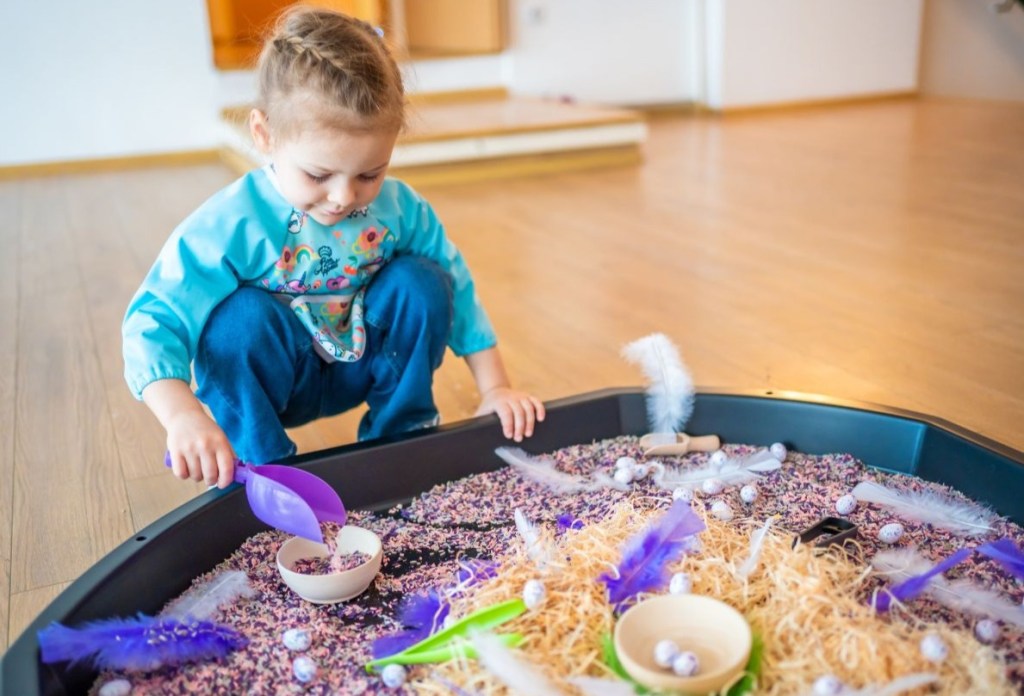
I’m thinking of making a sensory play box we could explore on the deck. It would require a big container of Wet Wipes, 2 plastic tubs, one with dirt, and one with soapy water, along with some little plastic cars and animals. Since it’s still kind of warm out here in the Midwest, I’ll let the kids strip down to shorts, since they are sure to get all muddy. I’ll give them some scoops and cups and let them have at it, making mud and running toys through the muck, then washing them off in the soapy water. They will have permission to be as dirty as they want to be, and afterwards, we’ll clean up and eat bananas, and read books. What do you think? Will it work? I’ll be sure to take pictures and post them later, to let you know.
For this month’s Recommended Read, check out my review of the No, David! books, by David Shannon, about a little boy who consistently gets into mischief.
And under my Activities section, you can learn more about how to build an outdoor sensory play box for your little wild ones.
Well, “Back-to-School” season is here, and I’m reminded of when I was a girl returning to school, being assigned an essay on “How I Spent My Summer.” While some of my childhood summers were action-packed with travels to Yellowstone and Disney World, most were spent at home, playing in the heat with neighborhood friends, and doing very ordinary things that I then thought were boring, such as helping pick and weed in the garden, and shucking corn.
Now, I look back at the last three months and wonder where in the world time has gone, for it seems there is no end to activity and there is never enough time to enjoy all the ordinary things of life, which I so greatly cherish.
If you follow my blog, you probably noticed I skipped a July entry. Quite honestly time got away from me because of my focus on other projects. But, for you enquiring minds, let me fill you in on what you’ve missed.
At least a few hours each day, I spent time writing and revising manuscripts, searching for comps, and preparing queries for agents. It’s easy to sit down at my computer with that first cup of coffee and get lost in the world of words and writerly routines. What I intend to be a two-hour work session can quickly turn into a six-hour session, then I switch gears and rush through the other things I’ve outlined for the day.
Special projects this summer included watercolor, ceramics, collage, and paper-making classes, tending my sweet chickens and gardening. Since spring I have been digging up perennials and relocating them into new beds, adding to those beds, and establishing a new shade garden around our deck. Of course, putting in gardens doesn’t mean the work is complete. Throughout the growing season there is watering, weeding, a little more planting and then harvesting fresh vegetables. Oh, and did I mention the bees? We raise honeybees. Last week we harvested oodles of beautiful liquid gold. In June, my daughter surprised us and announced she too wanted to raise bees. We couldn’t be more thrilled. There have been a few “mentor” check-ins to see how she is doing, but the truth is she needs no mentors. She’s done her homework and is doing a super job.
And then there has been blessed time spent with loved ones – a handful of fun-filled days with three lively wonderful grandchildren. The oldest one, Jaycie, is now a freshman. She has come to stay at our house a few times this summer and I wonder how much longer she’ll think it’s cool to hang out with Granny and Papa. I dread that inevitable time when she’s too busy to come and has moved on. Her childhood has lasted all of five minutes. Her little sister Hallie, and brother Owen, are both high energy toddlers who are into everything and finding their words. Hallie has decided to call me Bammaw and Owen calls me Nana, the word he also uses for banana. It’s okay, I’ll answer to anything and just count myself blessed that they run to me when I come for visits. What pleases me even more is that, like Jaycie, they associate me with books, and it usually isn’t long after I arrive that they pull on me and ask to be read to.
Throughout this summer I enjoyed frequent calls and visits with my friend Mihaela, a young woman I met in my ceramics classes five years ago. Every week we would sit together and share our life happenings and ideas for experimenting with glazes, favorite recipes and swapping flowers with one another. She has been a treasure in my life. But alas, times change. Mihaela and her family decided to move back to Romania. I bid farewell to her this month and hope it’s not the last time I ever see her. While I wish her love and all the best there now is a void where she used to be.
So, there you have it. My July was spent relishing living and loving on the hottest dog days of summer. And it flew by. Now it’s time to march on and be more faithful about blogging.
Under Recommended Reads, you will find this month’s book review for Sourgrass by Hope Lim and Sharhzad Maydani, about two good friends who must part ways. I know you’ll find it as touching as I do.
You would think that having 30 or so days each month would make it easy to come up with topics to write about for this blog. But that is often not the case for me. As a friend of mine once said, “Sometimes life gets too Lifey.” In other words, we get so busy in life that all our energy and creative juices can get sucked right out of us. Since writing requires focus and large chunks of time, this can be a challenge for people like me, whose minds and bodies are often scattered and distracted. Then again, ideas can come zooming in from out of nowhere and slap you upside the face. Such was the case with this month’s post.
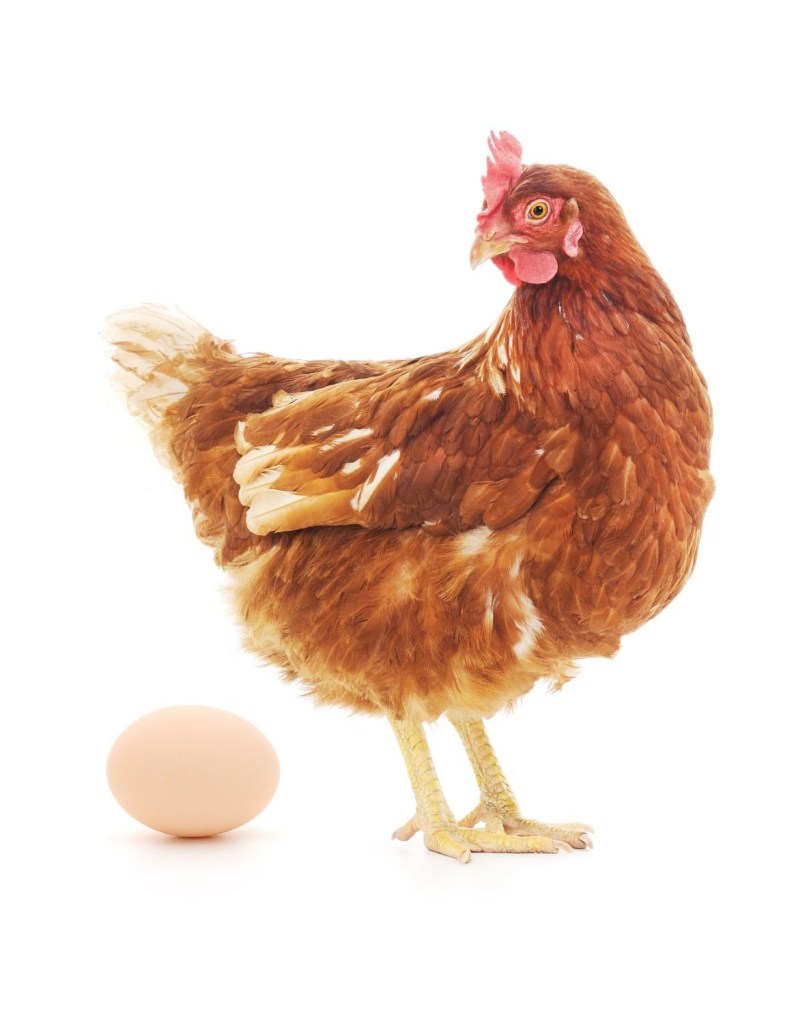
I was reading through a stack of children’s books, studying the subject matter, illustrations, and how writers craft their stories, when I came to First, the Egg by Laura Vaccaro Seeger. The book is a very short and simple concept story about growth, change, and basically how this becomes that. Eggs become chickens, and tadpoles become frogs. You get the picture. However, I then turned a page. Suddenly, paint becomes the picture. Words become the story. Seeing those words on the page was like being hit by lightning. I don’t know why, but tears began to form in my eyes. Actually, I just lied. I understand why I became teary because, on this particular day and many others, I was wrestling with feelings of defeat and imposter syndrome. Sometimes, it’s tough to pick myself up, dust off my disappointment, and write more stories. Constant rejections sting, some more than others, and I am now at 102 rejections in five years. My husband compares me to Stuart Smalley whenever I start talking about giving up writing children’s stories. However, this book, First the Egg, laid it all out very simply for me. Everything truly excellent in our world begins small, simple, and basic, and over time, through many changes, becomes transformed into complex and magnificent things. Caterpillars, for instance, are cool and amusing but limited in their abilities. Yet after what must feel like a grueling process to them, they metamorphose into butterflies, like Monarchs, capable of pollinating the plants that this world needs and making incredible migrations over vast ecosystems through constant dangers to winter in Mexico. These tiny, delicate creatures are capable of what should seem to be impossible.
So, maybe I will keep writing my stories. Perhaps I, too, can do something that seems impossible and get published. Because, as Stuart Smalley would say, “I’m strong enough, I’m good enough, and doggone it, people like me.”
Recently, I have been exploring the art of collage-making. I periodically dabble in it, thinking I might take a stab at illustrating one of my stories and perhaps have better luck querying a publisher, as writers who also illustrate seem to be in demand. As I work on my compositions, I think again of Seeger’s message in First the Egg. Each collage begins with a simple mark made on a blank sheet of paper. Then, over time, many more marks, shapes, and colors are introduced and layered. The paper eventually dances with interactions between colors, patterns, and forms. It all begins with one mark, purposely made, followed by another and another until everything binds together as a statement, a feeling, a satisfying expression. First the egg, then the chicken. First, the mark, then the masterpiece. Baby steps. Success is built through baby steps.
For this month’s Recommended Read, you can learn more about Laura Vaccaro Seeger’s book, First the Egg. And under the Activities section, you can explore my Create A Collage project. In whatever we do in our lives, may we remember to enjoy the process of living, one step after another.



 Little Seeds Read
You must be logged in to post a comment.