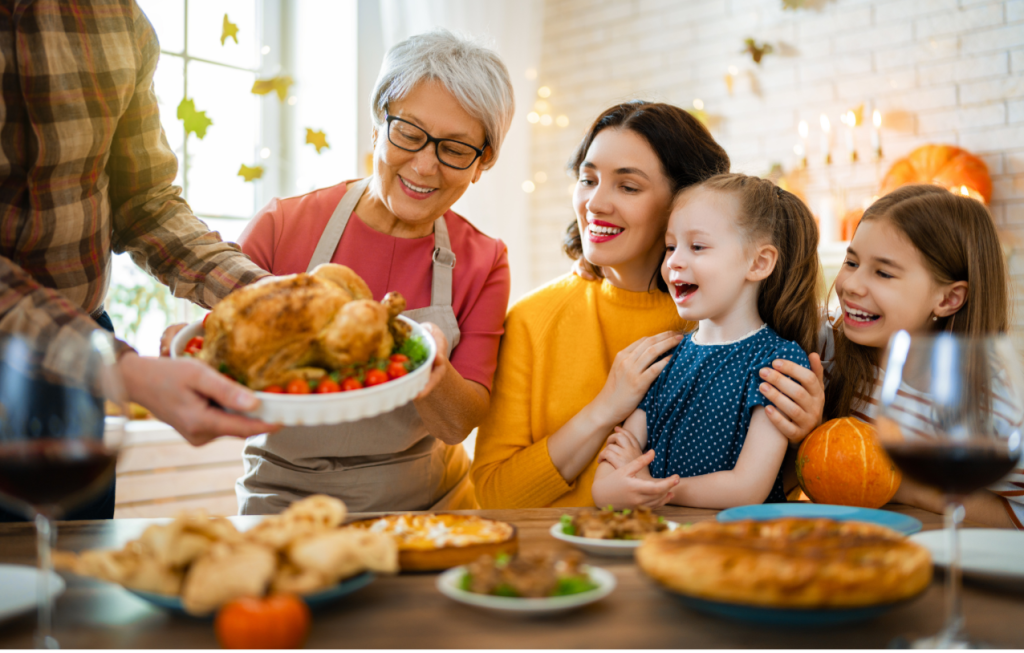
Thanksgiving is near, and I am gearing up for the big day. I can hardly wait to see my family, and this year will be extra special because my brother Doug, who has not been home for ages, will be joining us. He will get to meet my two littlest grandchildren for the first time. As I plan the menu, I have come across some exciting new recipes I would like to try. The problem is, everyone already has their favorite dishes and will be looking forward to those, so that means there is no need for anything else. I could sneak in a few new additions, but there is, after all, such a thing as having too much to choose from and limited counter space. Tom needs his green bean casserole and corn casserole, my son-in-law likes his dressing, and all three grandkids must have mashed potatoes and gravy. Everyone wants pumpkin pie. I love turkey, and yes, even Jello salads, but most of my family are not wild about either of those. It is hard to please everyone.
Surely, participants in the first Thanksgiving were not so fussy. In fact, I feel certain that they were grateful for any morsel they could get.
The menu of the first Thanksgiving celebration between the Pilgrims and the Wampanoag was nothing like what Americans eat on the holiday today. There were no green bean casseroles, pumpkin pies, or Jello salads. And turkey? It was not the only meat served. Historic documents tell us that the Wampanoag brought five deer for the feast, and that the Pilgrims regularly ate quite a bit of readily available shellfish.
The first Thanksgiving was an extended celebration, lasting three days, in celebration of the Pilgrims’ surviving a brutal first year in this country. They could not have done so without the aid of the Wampanoag, who taught them skills and how to use the resources of this new land.
While there are no specific accounts of what foods people ate at that first Thanksgiving, historians report that William Bradford, the Pilgrim colony governor, sent four men on a “fowling” mission to prepare for the event.
The meal may have consisted of:
Roasted wild venison.
Roasted or boiled goose, duck, or turkey.
Grilled or boiled Fish (cod, bass, and eel)
Shellfish (mussels, clams, oysters, and lobster)
Corn, ground into a meal and made into thick, sweetened porridge.
Boiled or stewed beans.
Roasted squash or pumpkin (No pumpkin pie! Butter and wheat flour necessary for making pie crust were not available, and they had no baking ovens.)
Walnuts, chestnuts, and acorns (eaten raw, roasted, or ground)
Wild cranberries or blueberries (fresh or dried)
Wild grapes (eaten fresh or dried as raisins)
Onions and wild leeks (ramps) stewed or roasted.
Turnips, boiled, roasted, or mashed.
Parsnips roasted or boiled.
Dried raisins and plums.
Maple syrup for flavoring.
Sources:
I ponder how my family would react to such a meal. To me, it all sounds delicious and extremely healthy, especially since I recently learned I am pre-diabetic and need to cut carbs. What if, this year, I mixed things up a bit? I will feed my family’s bellies but also serve ‘food for thought.’ I will mention the story of the first Thanksgiving to talk about at the table. Though I will not deviate too much from my old standby menu, I could add a few things for folks to think about. A bowl of dried berries and nuts to munch on. A side dish of roasted parsnips and turnips. Maybe I will not buy such a big turkey. I could prepare a smaller one, but also serve something else with it. Duck? Or more vegetable options? I am not sure I can bring myself to eat a rabbit or a squirrel, though I have tried them in the past. Both of my grandmothers always served oysters, either scalloped or in stuffing, and oysters would be traditional, but my husband is allergic to shellfish, and I am not sure that would go over well with the current generations.
Last autumn, Tom and I travelled the entire northeastern seaboard. A memorable stop was Plymouth, Massachusetts, where we toured a replica of the Mayflower ship the Pilgrims traveled on. We were astonished by the crowded quarters the Pilgrims were confined to. In fact, they were not allowed on the deck of the ship. Their trip was long, rocky, smelly, dark, and lacked all privacy and comfort. Their journey was absolutely one of desperation to escape. How fortunate they were to meet the resourceful Wampanoag who showed them the compassion that nurtured them through their first rough year. And yet, I can imagine how the Wampanoag felt seeing the Pilgrims arrive and set up houses in one of their abandoned villages. Who were they? Why had they come? What were their intentions? Why were they so strange? The Pilgrims were indeed intruders on Native lands and a sign of hard, sad, unjust things to come for Indigenous people. And yet, there was this remarkable moment of a feast built with tolerance, curiosity, and compassion between people of differing cultures. A moment of gratitude and shared hope. Something we must never lose sight of.
This month, under Recommended Reads, I am featuring the book, Keepunumuk: Weeâchumun’s Thanksgiving Story by Danielle Greendeer, Anthony Perry, Alexis Bunten, and Garry Meeches Sr. It is the Thanksgiving story from a Native perspective. And under the Activities section of the blog, you will find A Happy Handprint Turkey project to enjoy with the family.
 Little Seeds Read