In the 1960s, one of my favorite summertime activities was catching and observing insects. I had a little net and a “bug jar” that I’d place insects in for study. My bug jars were usually mason jars with nail holes hammered into the lids to create air holes for whatever I caught. I’d prepare the jar for its visitors by adding some sticks, grass, or leaves so the insects I caught could crawl on something.
Since I was terrified of bees and wasps, they were never on my capture list. I mainly focused on moths, butterflies, fireflies, beetles, ants, and spiders. I loved watching them up close and studying the details of their curious bodies and behaviors until it was time to release them.
Of all the insects I caught, butterflies were the most enjoyable and challenging to catch. Butterflies just have a sense of when something is approaching too near, and they take off in zig-zaggy flight, making for an exciting chase. It’s only when they find an irresistible spot of nectar that they can’t ignore that you can actually have a chance at capturing them. If not, you might have more luck catching injured ones with damaged wings or missing legs.
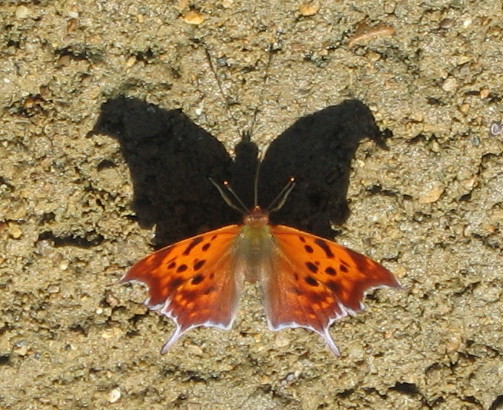
My parents were gardeners, so there was plenty in our yard to draw insects. I remember butterflies could easily be found. Swallowtails, Buckeyes, Sulfurs, Commas, Question Marks, and Monarchs were always plentiful and enjoyable. But alas, we took for granted that it would always be so.
Fast forward to 2023. Despite my efforts to garden this summer, I’ve seen very few butterflies. Monarch butterflies, in particular, are very scarce. Every year I see fewer and fewer. It’s a great sadness for me, and I fear they’ll disappear altogether within my lifetime. How can this be? How can we, as supposed intelligent beings, let this happen? According to the National Wildlife Federation, Monarch butterfly populations have declined by 90% since the 1990s! We know why they are disappearing, and yet… we let it happen by destroying and marginalizing their habitat, applying herbicides and pesticides, then trying to justify our actions. There must be a better way.
Before moving to town, my husband Tom and I lived on a few acres in the Illinois River Valley. Tom had planted about a third of our property in prairie; butterfly life was abundant there. In our prairie, the butterflies were quite concentrated and diverse in species. While wanting to provide habitats for all butterflies, Tom aimed to develop an environment that would also draw the Regal Fritillary, a state-threatened species. Our prairie grew for 20 years, and every year, Tom monitored the butterfly population for the Regal Fritillary. It wasn’t until our last year living on that property that one finally appeared, so in moving and leaving our prairie, this accomplishment was bittersweet. The wonderful thing we’d long awaited had finally happened, and then it was time to go. Three years have passed, and I think about our butterfly friends and the new property owners. Is there still a safe haven there? Does the Regal Fritillary still appear? And for how long?
So, here we are again, in new surroundings, longing for butterflies. What can we do? Start over. We can consider how we personally impact the nature around us by making smart choices. We can forgo the perfectly manicured lawn and let the dandelions grow. We can avoid using herbicides and pesticides. We can plant more flowers. And we can spend as much time as possible savoring the outdoor world — watching for wildlife — for what shows up today could well be gone tomorrow.
To learn more about monarch butterflies, check out the National Wildlife Federations web page at Monarch Butterfly | National Wildlife Federation (nwf.org)
This month, under the Activities section, you can learn how to make a “Pollinator Puddler” offering refreshment to insects in your backyard. And under Recommended Reads, learn about the importance of puddles in Hello Puddle by Anita Sanchez and Luisa Uribe.
 Little Seeds Read